Here are the poses we did in week seven of the Beginners course (pg 43-44 Basic Guidelines)
Samasthiti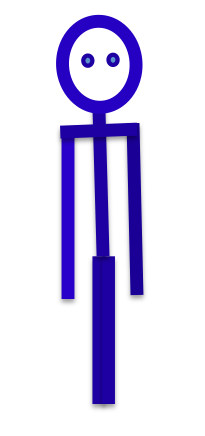
Mountain pose: standing with feet together, arms by the side and gazing straight ahead.
Utthita Trikonasana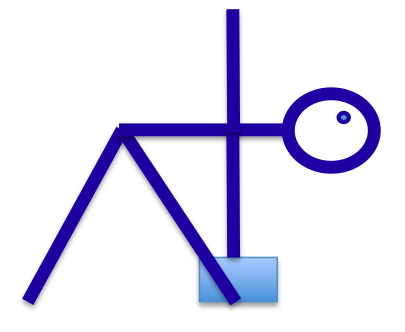
Extended triangle pose:
Legs wide, Feet turned right, Torso extended to right. Right hand on shin. Left hand straight up, palm facing front.
Virabhadrasana II – Second Warrior pose: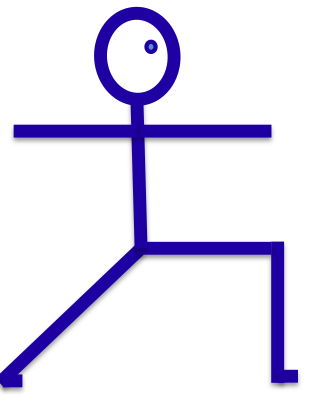
Wide legs, Bent right leg so that knee is directly above the ankle (not behind – too wide; not in front – too narrow). Torso is vertical – reach back with the left hand, Arms extended parallel to the floor and in line with the legs, Face forward to look beyond the right hand.
Vimanasana
Flying vehicle pose: Legs are wide apart, the upper body is turned towards the front leg (unlike Warrior II, in which the torso remains perpendicular to the splayed legs). The Pelvis faces the front leg and the front leg is bent so the thigh is parallel to the floor. The back leg pushes straight back strongly (ideally the back heel is on the floor). The arms are extended horizontally out to the side in order to assist with balance.
Virabhadrasana I
First Warrior pose: Right leg (front) bent at knee with thigh parallel to ground. Left leg (back) straight with heel pressing to floor. Torso vertical and facing the Right leg. Arms raised vertically with palms facing inwards and face looking upwards.
Variation: Place a block under the back heel and pressing firmly into the block to straighten the back leg. Once you have your balance raise your hands vertically to the ceiling and only if stable look upwards.
 Parsvottanasana
Extreme lateral stretch: Stand with right stepped in front of left leg and hips facing the front. Hands on hips with elbows back. Sternum lifted, looking forward, Concave back. Extend forward keeping back straight and placing hands on blocks with arms straight. Look up. This is the pose at this stage.
Classically the chest is reaching down the leg toward the knee and the head reaches down toward the ankle.
Parivrtta Trikonasana (New Pose) Rotated Triangle pose:
Come to Aircraft pose (as intro to warrior 1) above. Rotate the torso to the right so that the arms are parallel to the extended legs. Place right hand near the left foot. Bend your right elbow and place right hand on your hip. The classical pose has the upper hand extended over the head and turning to look upwards under the arm.
Ardha Chadrasana
Half moon pose: 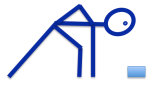
a) Bending knee: From the Triangle pose we place the upper hand onto the hip. Then bend the front leg and shift the weight forward to place the hand onto the floor or block. The back foot is light and we transfer the weight forward onto the hand and the front foot.
.
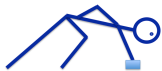 b) going up bent elbow: Once the weight is transferred to the front foot and the hand, the standing leg is straightened and the back leg is lifted horizontally
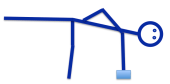 c) Final with bent elbow: At this stage we keep the upper hand on the hip, and at most the face can be turned to face the ventral side of the body. However, in the classical pose the upper arm is extended up and the head is turned to look toward the upper hand.
This requires careful balance, so it will be introduced only later. This week we teach it free-standing, although the alternatives are available for those who need it.
To come down: Look down! Keep the weight forward onto the hand. Bend the front leg and lower the back leg extending it far back. Keep the body horizontal – don’t come up – and return to Triangle pose and then come out in the normal manner.
Alternative 1. Back to the wall: The pose is done close against the wall with the back to the wall. This provides good stabiltiy.
Alternative 2. Heel to the wall: The standing leg is placed a full leg’s distance from the wall, and the back leg is then raised and the heel pressed into the wall for stability and leg lift.
Uttanasana (New pose)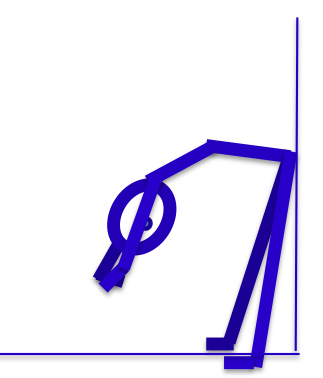
Extreme body stretch
a) legs apart, arms down
b) feet together
Padangustasana (New pose)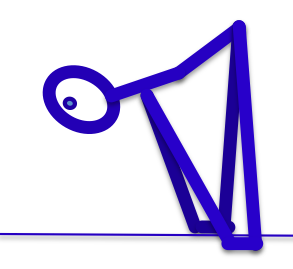
Gripping the foot / toe pose
a) concave back – this week
b) head down – next week
Virasana
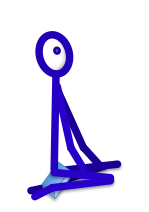 Seated Warrior / Hero pose:
Sit on a block or higher with legs extended. Clear the upper calf from the inner knee and fold one leg back.
Ensure that the top of the foot and the full length of the shin is facing straight down and the toes are pointing straight back with the ankle bone in line with the foot and the shin (not bending outwards). The heel and the foot is to be wider than the hips (as classically the seat is between the feet rather than above them).
Similarly bend the other leg underneath.
NB: If this shin and foot alignment cannot be achieved with both legs then more height under the seat is required. Work carefully with your knees.
Sit with your torso erect, the chest open and palms facing downwards on your thighs with the elbows naturally bent.
Alternative: If there is undue pressure on your ankles or shins, a folded blanket can be placed under your shins with the ankle free off the edge.
Parvatasana in Virasana
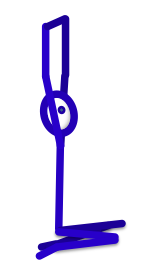 Interlaced fingers overhead in seated warrior / hero pose:
Sit in Virasana as described above (with block if required).
Interlace fingers and extend arms forward with straight elbows. Raise hands with straight arms above the head. Keep looking forward.
Change the interlacing of fingers and repeat arm action.
Adho Mukha Virãsana
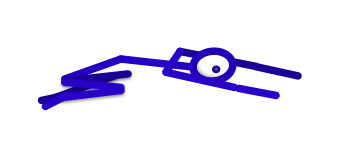 Forward/downward facing warrior/hero pose:
Sit on heels with knees bent and knees wide toes together. Extend trunk between knees, extend arms straight with palms down on the floor. Lower the head to rest forehead on the floor. Spread fingers and press down to lengthen body.
This is considered to be a resting pose.
Adho Mukha Svanasana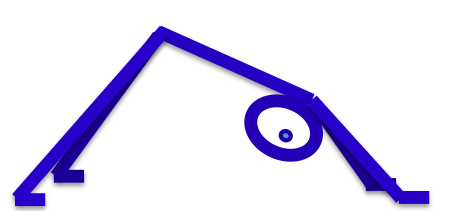
Downward facing (dog) pose: Arms straight, shoulder width apart fingers pointing forward. Legs straight hip width apart toes pointing forwards and heels down to the ground. Back straight and buttocks lift high. Chest moves inwards toward knees and head hangs down naturally.
Urdhva Mukha Svanasana (New Pose)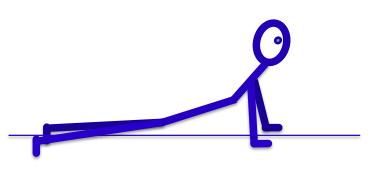
Upward facing (dog) pose: Arms straight, shoulder width apart fingers pointing forward. Head up, Chest up and broad. Legs straight hip width apart toes spread and pointing straight backwards. Back straight and buttocks descended. Legs straight. Chest moves upwards.
Utthita Janu Sirsana (New Pose) Extended head to knee pose:
a) Utthita Janu Sirsana 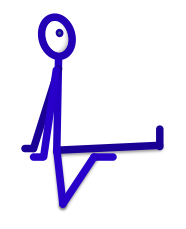 preparation from Dandasana
Hands beside hips, one leg bent with sole of foot into thigh of the extended leg.
b) Urdhva Hasta Janu Sirsana Raising the hands with straight arms. 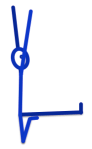
c) Urdhva Mukha Janu Sirsana (curved back) 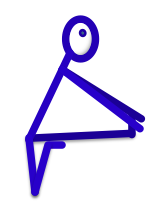
Gripping the feet with straight arms
This week we do a lengthwise twist:
With the right leg extended grip the outside of the right foot with the left hand. Place your right hand beside and slightly behind the right hip.
Lengthen the torso forward toward the extended foot then turn the upper torso and face to the right, away from the bent knee.
Next week we shall approximate the full classical pose.
d) Janu Sirsana (final) For next week.
Gripping the feet extending elbows outwards and drawing face toward ankles:
Paschimottanasana
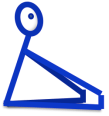
Extreme body stretch:
Stage 1: Sit in upward facing staff position and grip the toes, coming forward as much as our hamstrings will allow without the back bending, and keeping the chest and face up.
Stage 2: Classically the arms are bent outwards, the head is taken forward toward the feet and rested on the shins.
Salamba Sirsana prpearation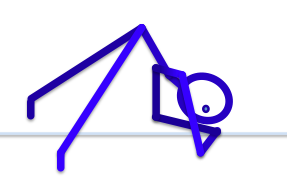
First preparation for Headstand:
Fingers interlaced and thumbs up. Elbows shoulder width apart. Head off the ground and looking towards thumbs. Press elbows and wrists and walk straight legs in. Bring nose toward the thumbs.
Ardha Halasana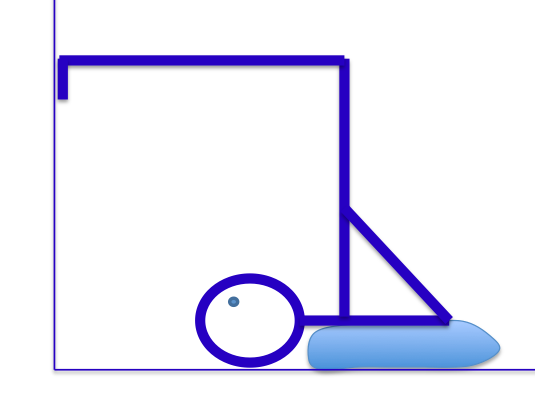
Half plow pose:
Torso and and shoulders on flat pillow, neck free over the edge. Head towards the wall. Shoulders shoulders leg distance from wall. Torso vertical. Legs straight and horizontal. Feet into the wall.
Eka Pada Sarvangasana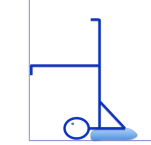
One legged shoulder stand:
If stable: raise only one leg vertically, bring down and establish symmetry, then raise the other leg vertically. Come down.
Salamba Sarvangasana
 Full torso shoulder stand:
If stable, raise both legs – one at a time and align the body keeping the weight onto the shoulders and pressing the elbows in to the pillows. There is no undue pressure on the back of the head or neck.
Halasana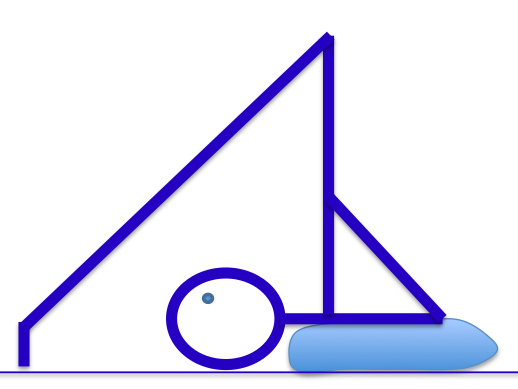
Plow pose: Keep pressing your elbows into the pillow as you descend one leg at a time over your head. The elbows press down and the hands walk further down towards the armpits, minimising pressure on the neck. The legs are straight and the toes pointed down. The buttocks are lifted high .
Karnipidasana
Ear pain/wig pose: From shoulder stand, the knees are brought down and aspirationaly pressed into the ears either side of the head. The toes are stretched beyond the head with the tops of the feet on the floor. The arms are crossed around the back of the thighs, and interlocked.
Alternative: If the feet cannot touch the ground a bolster is placed under the tops of the feet.
Paschiomottanasana
Extreme body stretch:
Sit in Dandasana, raise hands above head, extend hands beyond toes, grip outside of feet, lift the head and chest. Rest the head down toward the feet.
Savasana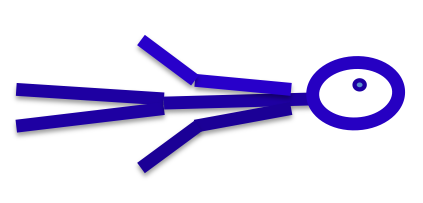
Corpse pose: Laying flat on the floor relaxing completely feet out to the side and with the eyes closed.
 drsta 👣